
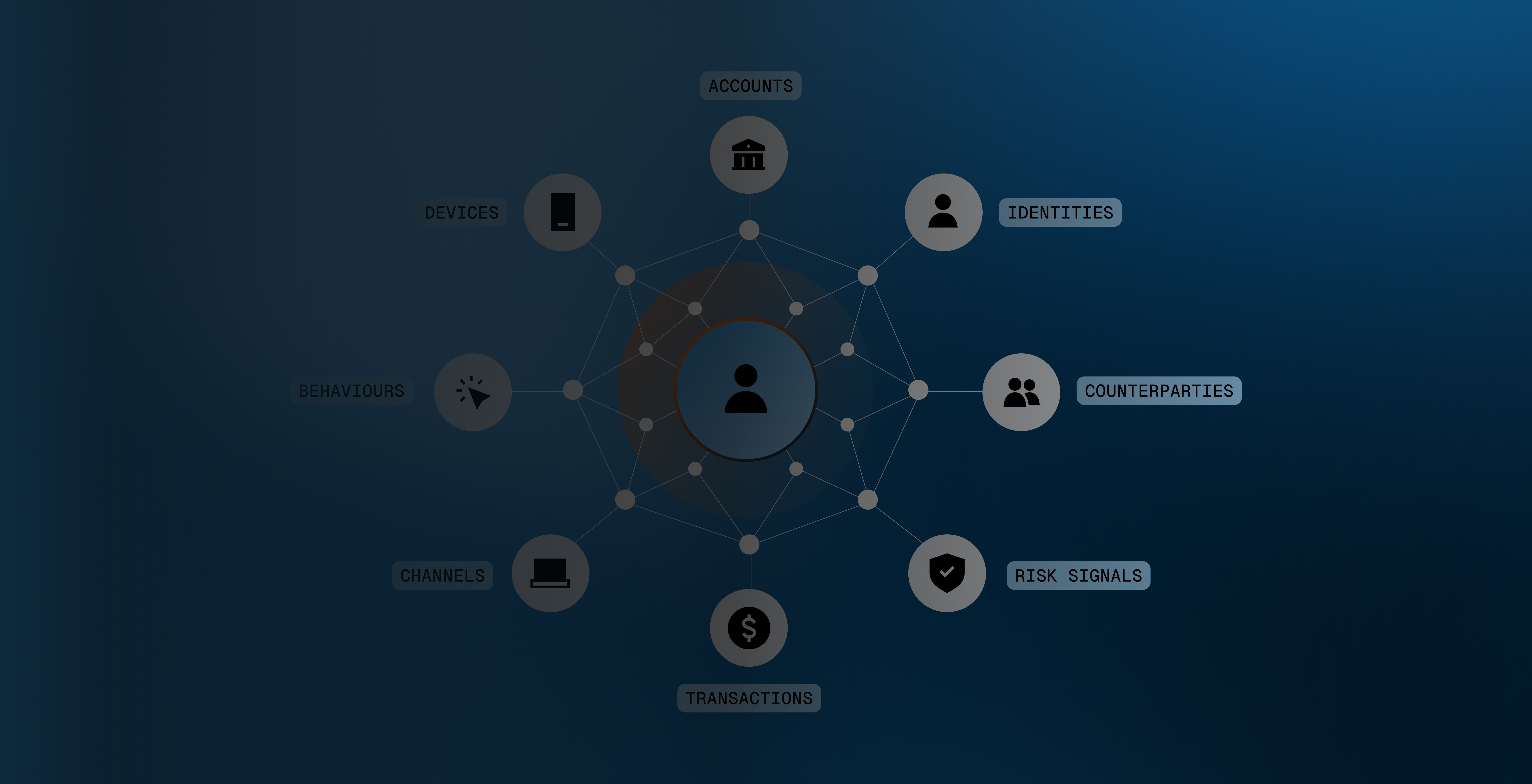
The Identity Graph
A connected foundation for authentication, fraud, AML and Customer 360 in banking
As fraud becomes more coordinated and AI-driven, scattered identity data becomes a risk. One customer can appear as several records, and one fraudster can hide behind many synthetic identities. This report shows how banks build an identity graph that links customers, accounts, devices, behaviors and risk signals in real time, giving authentication, fraud, AML and customer teams one trusted view.

Download the free report
What an identity graph changes
Synthetic identities stand out
Fake identities that pass single-record checks often share phones, devices or addresses that a graph exposes.
Authentication gets smarter
Checking a login against known devices, locations and behavior lets banks step up only the risky sessions.
AML and fraud teams see the same person
A shared identity view removes duplicate investigations and gaps between teams.
Customer 360 becomes real time
Linked profiles update as customers act, so service and risk teams work from current data.

What the report covers
Why fragmented identity data creates hidden risk
How an identity graph links customers, accounts, devices and behaviors
Detecting synthetic identities and account takeover
Using the identity graph for authentication, AML and Customer 360
Metrics for building the business case
Who should read it
Identity, fraud, AML and customer data leaders at banks who need one reliable view of who they are dealing with across channels.
Identity graphs in banking, answered
What is an identity graph?
An identity graph links all the identifiers that belong to a person or entity, such as names, emails, phone numbers, devices, accounts and addresses, into one connected profile. In banking it is used to verify customers, detect synthetic identities and give fraud, AML and service teams the same view.
How are identity graphs used for fraud detection?
An identity graph shows what accounts and applications have in common, such as the same phone, device or address. Fraud teams use it to spot synthetic identities and coordinated accounts that pass single-record checks, and to block account takeover by comparing each login with known devices and behavior.
How does a graph database improve Customer 360?
It resolves duplicate and fragmented records into one profile and links that profile to accounts, products, interactions and household members. Unlike a data warehouse, the links update in real time, so banks get a Customer 360 that serves personalization and risk at the same time.
How do banks use identity graphs for KYC?
Banks link each customer's documents, accounts, devices, addresses and related parties in the identity graph. During onboarding and reviews, they check those links for shared identifiers, hidden ownership and ties to known risk, which makes KYC checks faster and more complete.
Build one trusted view of identity
Download the report to see how banks build and use identity graphs. To explore it for your data, book a TigerGraph demo or start free in Savanna.